pitching: A Template Is only a Template
Why your pitch deck should serve your story — not the other way around.
Too many founders treat pitch deck templates like gospel. They copy every slide from an “industry standard” without asking the most important question: Who am I talking to — and what do they care about?
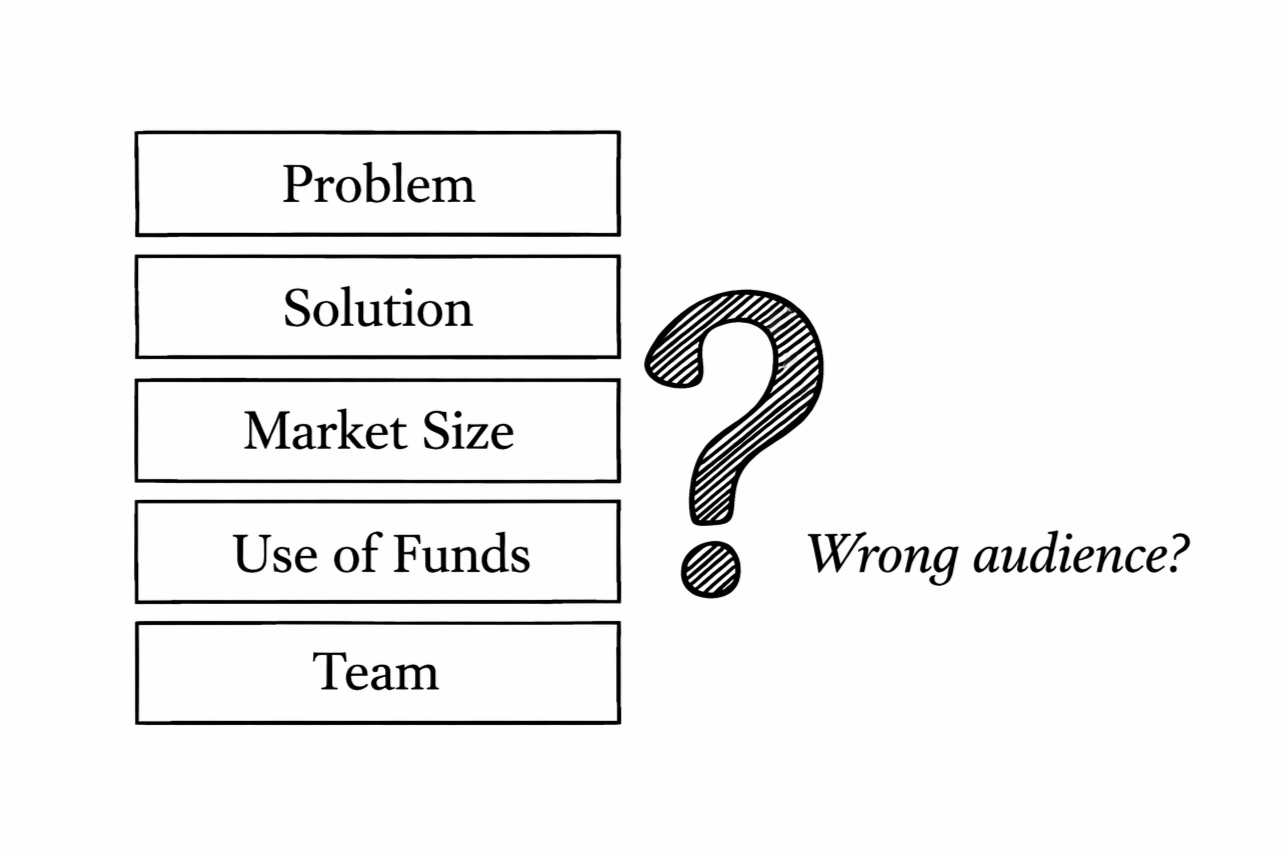
That’s how you end up pitching to a room of judges with no funding authority… and still include a “Use of Funds” slide. Or going deep into product features without clearly establishing the problem you’re solving — assuming the audience knows the problem as well as you do, or cares about the tech as much as you do.
Templates are helpful. But they’re not strategy. And they’re definitely not a story.
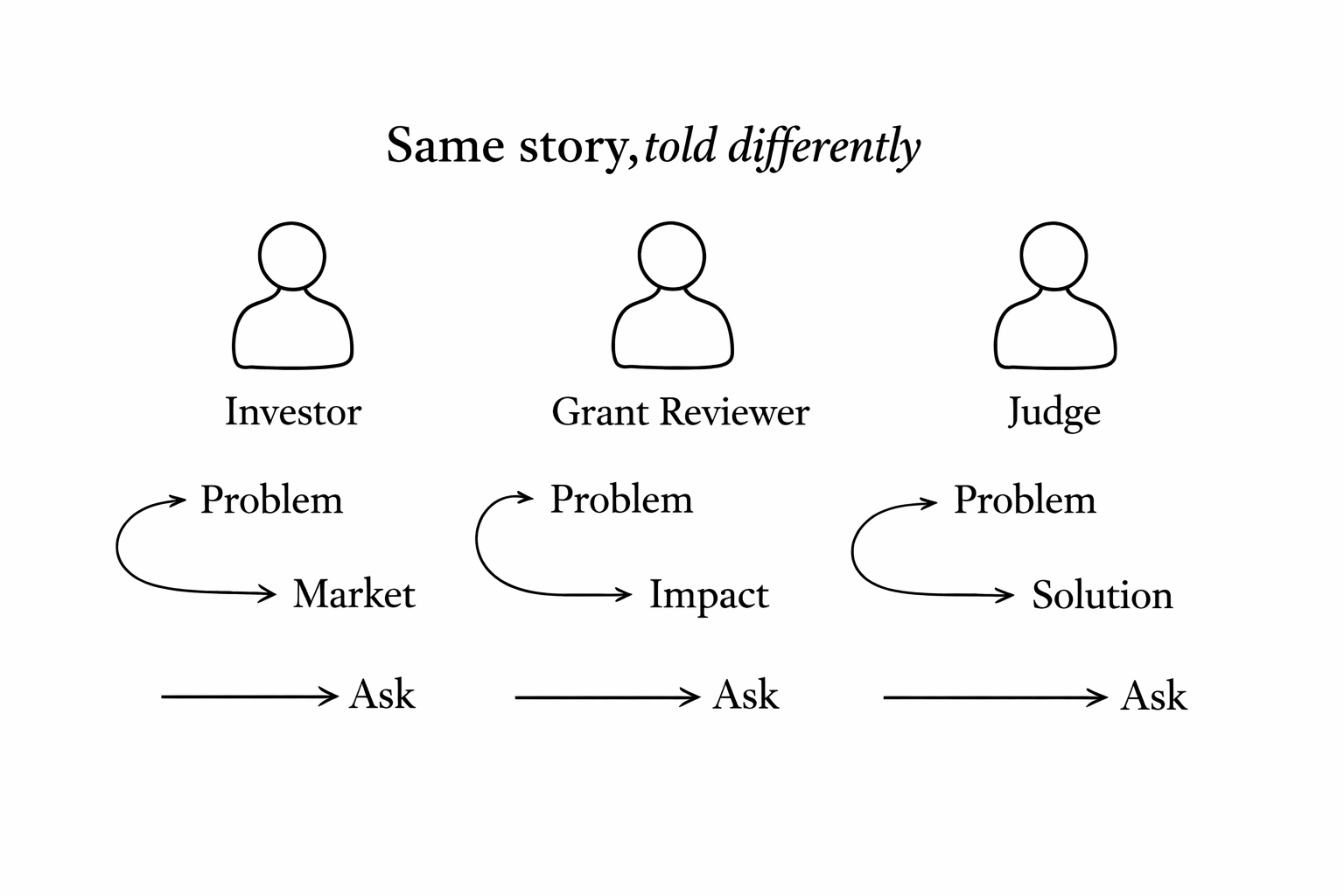
A good pitch doesn’t follow a template — it follows attention. It builds context, tension, and belief. And it adapts depending on the room. Not with a totally new story, but with the same story told slightly differently to resonate more clearly.
Actionable Advice:
Know your audience. Before you build a deck, figure out who you’re talking to and what they’re in a position to do. Judges, funders, partners, evaluators — they each need something different.
Start with the ask. Work backward from what you want the audience to do — not from a slide checklist.
Kill the filler. If a slide doesn’t move the story forward, it’s noise. Edit accordingly.
Your deck isn’t a template.
It’s a story told with intention.