
From Underdog to Leader: Building Institutional Reputation Through Storytelling
Shifting public perception through storytelling designed for influence, not attention.
Situation
In 2016, Toronto Metropolitan University (then Ryerson University) was undergoing a major leadership transition with the arrival of a new president. Internally, the university was building significant momentum: research was growing, incubators were thriving, and new programs were making national headlines. But externally, many stakeholders — especially in government and industry — still viewed the institution as a scrappy underdog rather than a serious research leader.
It wasn’t just a visibility problem — it was a perception gap.
The university needed to send a message: That Ryerson wasn’t just growing, it was ready to lead.
My Role
I led the development and execution of the university’s first-ever reputation campaign — shaping both the narrative and the media strategy to reach the audiences that mattered most.
My role spanned research, messaging, campaign planning, creative oversight, and cross-functional stakeholder alignment. I worked across departments — from government relations to marketing to the president’s office — to ensure the campaign told the right story to the right people, with the right tone.
Action
This wasn’t a traditional awareness campaign.
It was designed for influence — not clicks.
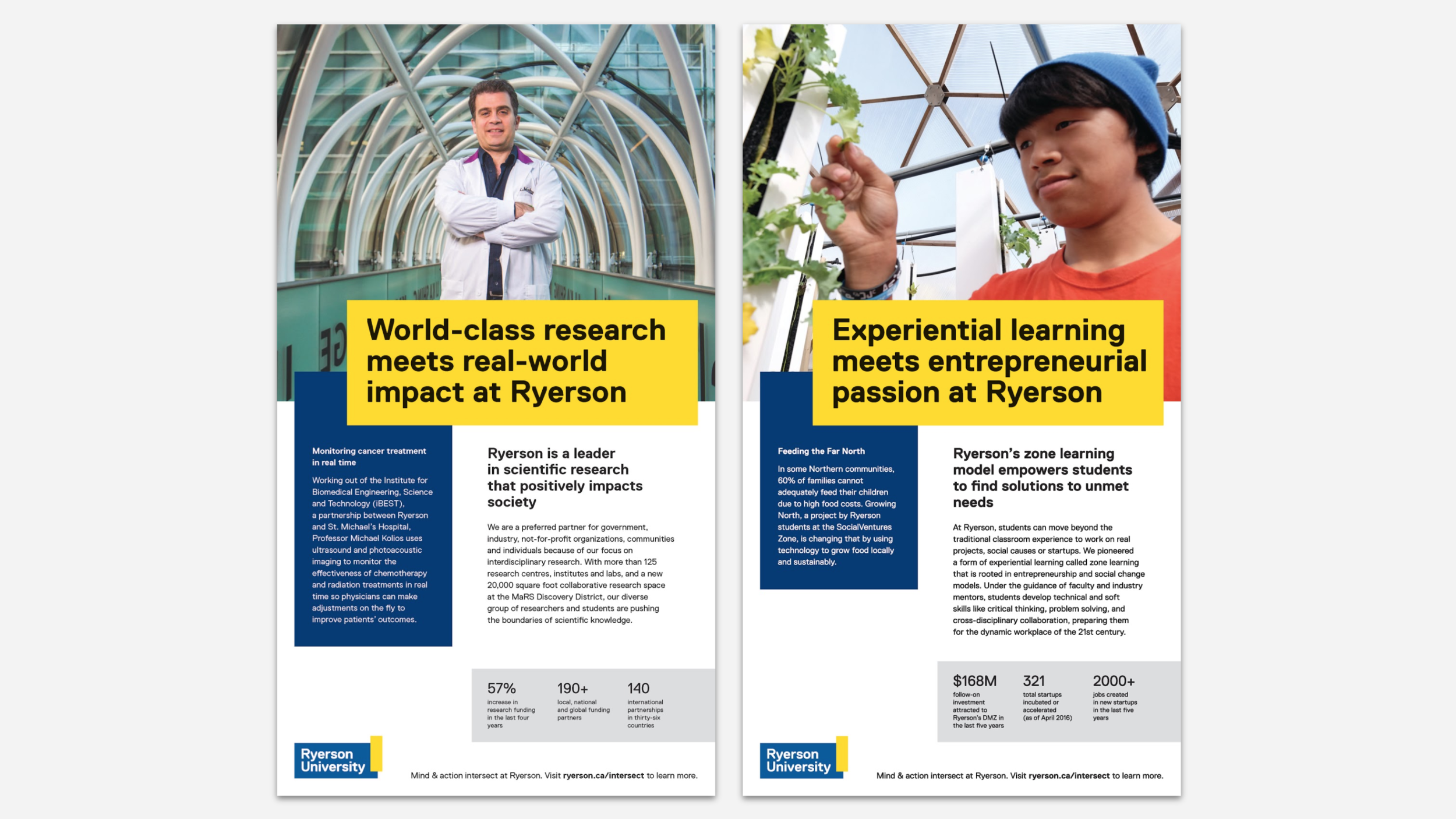
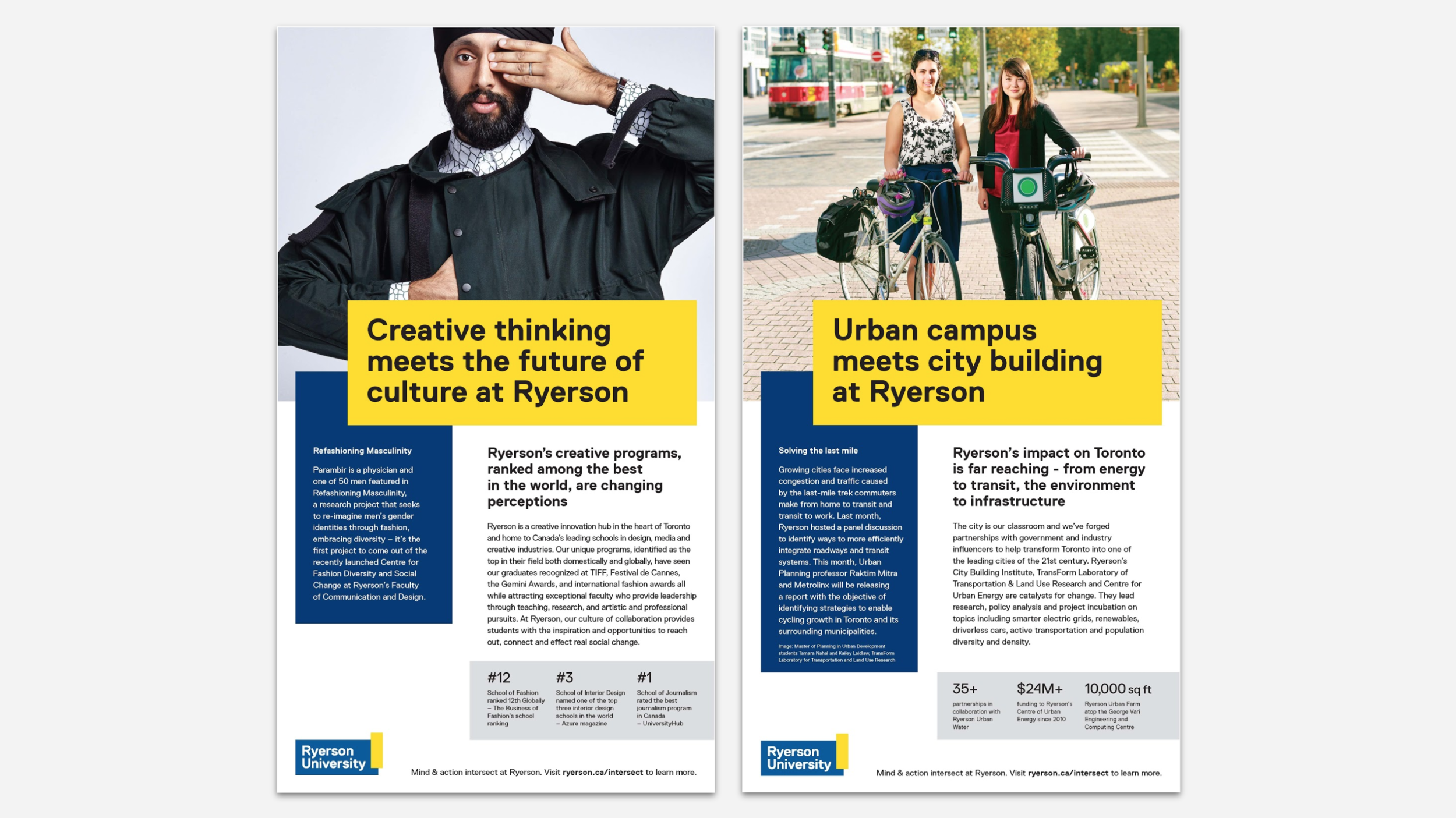
We anchored the entire campaign around four key research stories that aligned with the institution’s strategic priorities and the interests of our target audience. These weren’t just academic successes — they were chosen to demonstrate real-world impact in sectors like urban innovation, sustainability, and health.
Key components included:
Front-section takeovers in The Globe and Mail, Canada’s most influential newspaper, with four consecutive full-page ads — each telling a new story backed by infographics and proof points.
A companion microsite featuring long-form content, videos, and extended storytelling, all written and produced for an audience of executives, policy makers, and funders.
Multi-channel amplification, including:
Transit shelter posters and elevator screens in downtown Toronto office towers
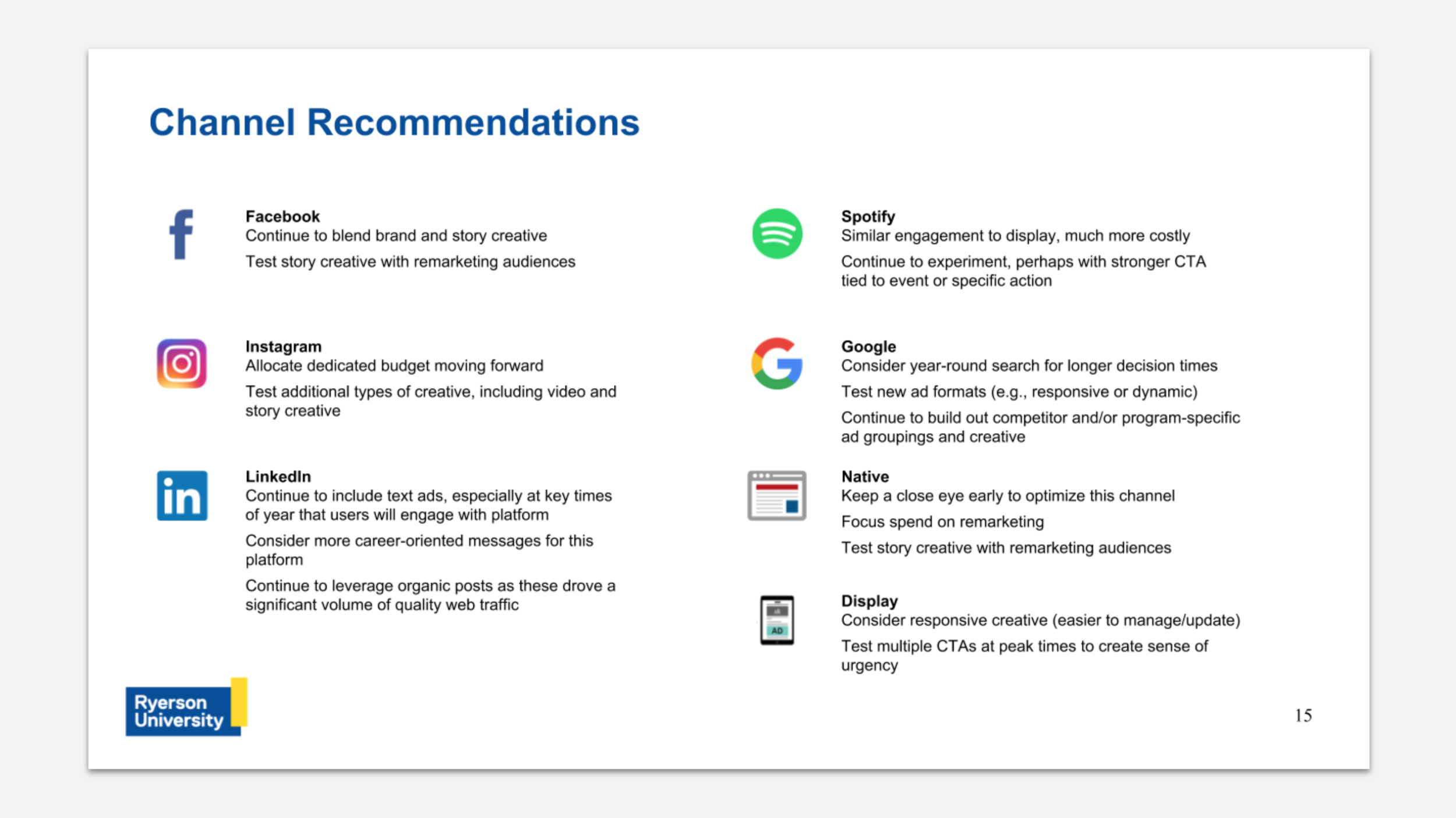
Programmatic native content
LinkedIn campaigns precisely targeted to government and industry leaders
We also developed an internal engagement strategy to align university leaders around the narrative, giving them language they could use in their own high-stakes conversations.
Outcome / Impact
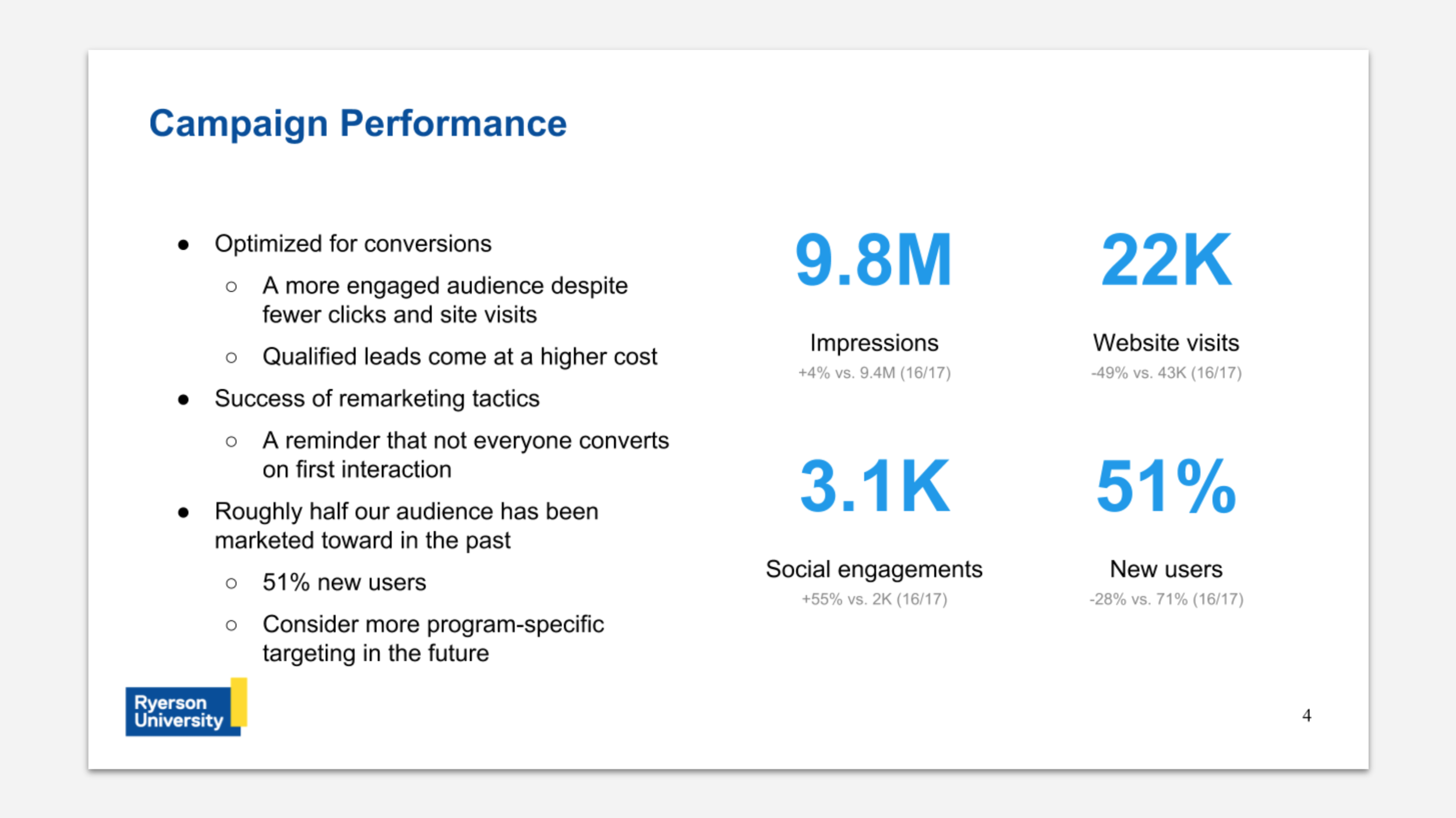
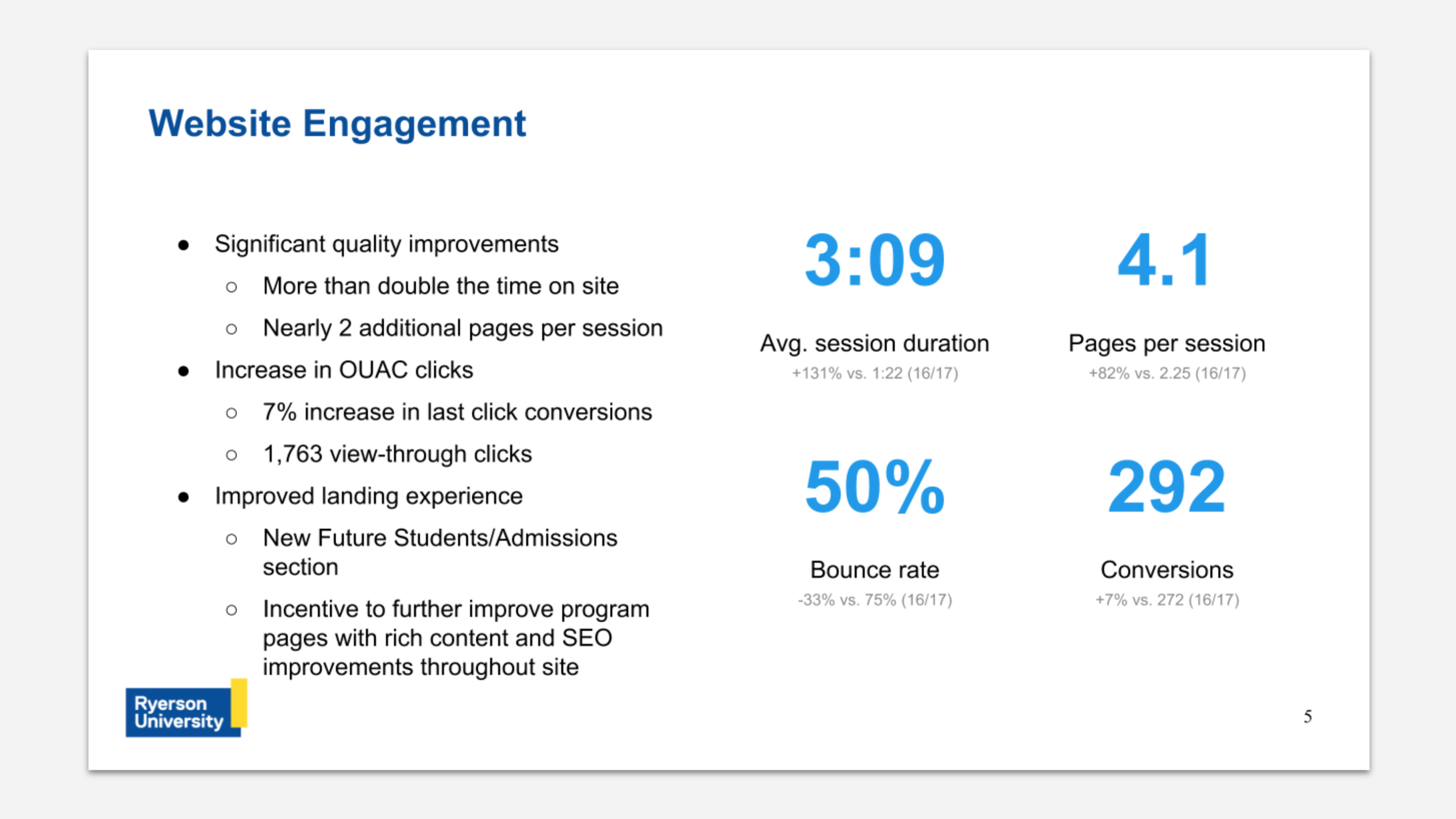
The campaign exceeded benchmarks across digital and social media, but more importantly:
It marked the first time the university’s research strengths were communicated as a unified story to external audiences.
Follow-up surveys with government and industry stakeholders confirmed that the campaign improved perceptions of Ryerson as a serious, research-focused institution.
The storytelling model was so successful that it became a foundational strategy for future executive communications, donor outreach, and public affairs work.
The campaign also received a Gold at the CCAE Prix d’Excellence Awards — a national recognition for strategic marketing and communications in education.
Why It Matters
This wasn’t just about media buying.
It was about shifting reputation through storytelling — not to entertain, but to persuade.
When you’re building trust with high-stakes audiences, clarity and credibility matter more than volume. This campaign proved that influence isn’t just earned through outcomes — it’s earned through how you tell the story.